
About BCC Cancer
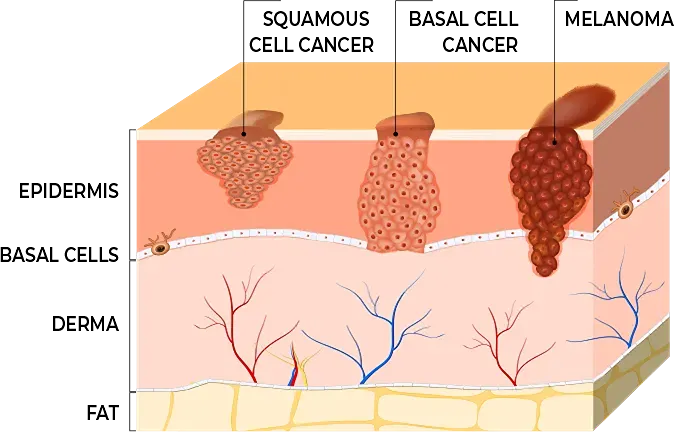
Basal Cell Carcimoma (BCC), also known as a rodent ulcer, is a type of skin cancer. BCC Cancer is the most common of the skin cancer types. It is also the least dangerous.
BCC Cancer consists of basal cells, which are located within the deepest layer of the outermost layer of the skin (epidermis). BCC Cancer is the abnormal and uncontrolled growth that arises within the basal cells of the skin. This cancer can appear as red patches, pink growths, open sores, or shiny scars or bumps.
Basal Cell Carcinoma is usually caused by chronic sun exposure and it is cumulative over a lifetime. The tumour will slowly increase in size over time. However, it is uncommon for BCCs to spread (metastasise) to other parts of the body. BCCs may damage the skin and tissue surrounding it, so it should never be left untreated.
Regular skin checks by a qualified skin specialist are highly recommended.
Types of BCC Cancer
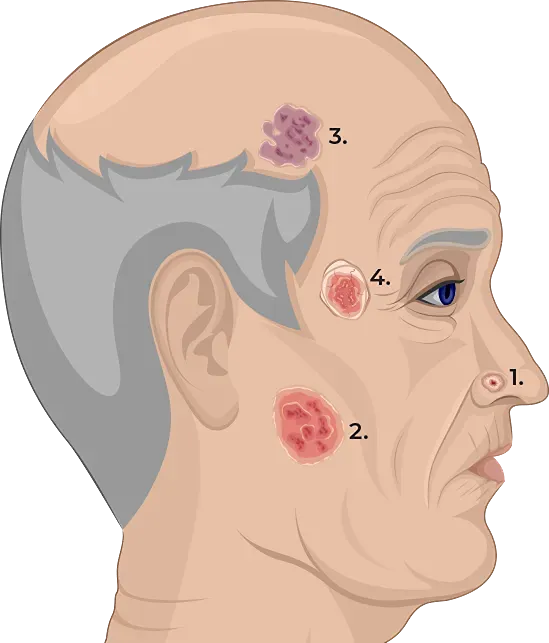
1. Nodular BCC
The most common type of BCC Cancer is Nodular Basal Cell Carcinoma. This presents as nodules on the skin, typically in the neck and head area, which have accumulated the most sun exposure.
2. Superficial BCC
This presents as a red patch, and can look similar to eczema. It usually appears on the upper trunk and shoulders, yet may also appear on the face.
3. Infiltrating or Morphoeic BCC
The diagnosis of this type of cancer is more of a challenge as it presents as a thickening of the skin or appearing as scar tissue. However this is one of the subtypes that can grow faster and nearly always has growth under the skin, extending much further that what can be seen on the skin surface. These lesions are far better treated by Mohs surgery than conventional surgery.
4. Basosquamous Carcinoma
This cancer is potentially more aggressive than other types of BCC Cancer. Basosquamous Carcinoma is a combination of Squamous Cell Carcinoma and Basal Cell Carcinoma.
The Causes
Basal cell carcinoma is often the result of an accumulation of UV radiation from sun exposure or solarium use, over a lifetime. It is believed that the mutations present in the DNA of BCC Cancer may be a direct result of sun exposure / ultraviolet radiation. A less common cause of BCC development is exposure to ionising radiation such as x-rays.
Those with fair skin are at higher risk of developing these rumours especially if they spend a lot of time outdoors. Men are more likely than women to develop them, and increasing age is also a risk factor.
The Risk Factors
Taking sun safety very seriously is the first step to reducing the risk factors of BCC Cancer. Minimising your UV exposure is recommended. This is most important for people with fair skin and who are outside for long periods of time.
However, for a lot of people in New Zealand, the damage was done at an earlier stage in life and therefore they still have a risk of developing this tumour even if recently they have been meticulous with sun protection.
The Diagnosis
Basal Cell Carcinoma can usually be diagnosed clinically by a dermatologist because of the specific features it displays when examined with an instrument called a dermatoscope. If there is any doubt to the diagnosis or if the lesion is to be treated with Mohs Surgery, then a skin biopsy will be taken. This involves some local anaesthetic and then a small piece of skin around 4mm diameter is removed from the suspected tumour. This sample is sent to the lab for examination by the pathologists.
If BCC is confirmed, your dermatologist would then determine the ideal course of treatment for you.
Treatment of Basal Cell Carcinoma (BCC)
Your dermatologist will recommend a treatment depending on the results of your biopsy, including the location and size of the BCC.
The treatments for BCC Cancer may include:
Excision
This is usually a simple surgical procedure taking around 30-45 minutes. The affected area is firstly numbed with local anaesthetic, then the tumour is delineated with a skin marker and a margin of normal appearing skin around the tumour is also marked out
Curettage and Cautery
This is a quick treatment which can only be considered for the superficial subtype of BCC, ie. BCC thought to exist only on the upper, epidermal layer of the skin. Local anaesthetic is injected around the lesion then an instrument called a curette is used
Treatment Success
The aim of any cancer treatment is to leave the patient with a minimum amount of cosmetic damage, while ensuring the cancer has been completely removed.
Early detection and treatment can make all the difference, and also result in a lower incidence of the cancer returning.
With such a variety of treatments currently available, it is worth noting that some treatments have higher cure rates and better cosmetic outcomes than other treatments.
Expectations After Treatment
Most people will experience bruising and swelling after surgery, however this will depend on the extent of the surgery you have undergone. Bruising and swelling would usually dissipate after 1 - 2 weeks. At least one postoperative visit would normally be required to assess wound healing and perform suture removal where appropriate.
We highly recommend visiting with your dermatologist to ensure correct healing of the area, while also checking the scar for any signs of recurrence. Your dermatologist will advise you if there is a need for this.